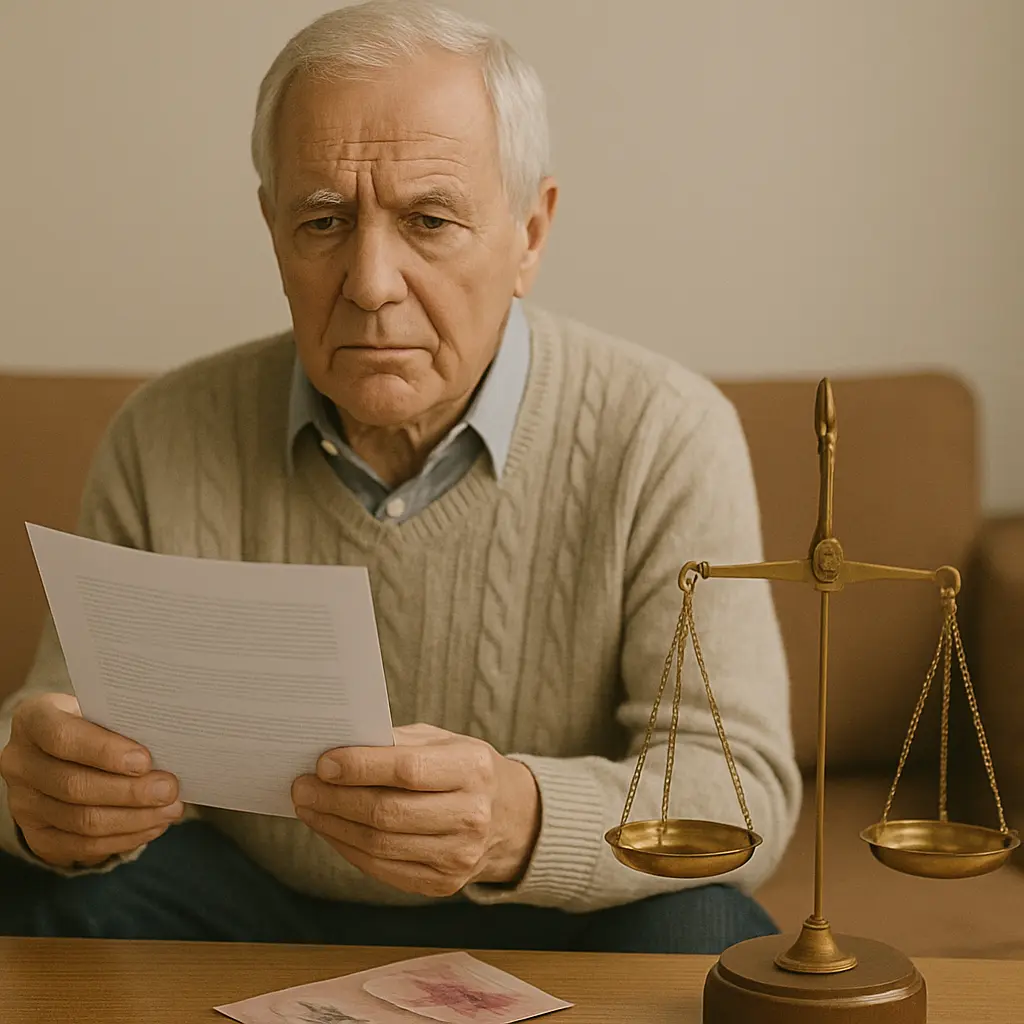
Retirement and Spousal Support: What You Need to Know
If you’re approaching retirement age and still paying spousal support, you’re likely asking: Do I still have to pay support after I stop working? The answer depends on several factors—including your retirement being voluntary or mandatory, your current financial situation, and any existing agreements or court orders.
A key Ontario case, Angulo v. Angulo, 2019 ONSC 1283, provides valuable insight into how the courts approach spousal support obligations during retirement.
Can I Lower My Spousal Support Payments If I Want to Retire?
Angulo v Angulo, 2019 CarswellOnt 3399 (Ont SCJ)
Background
The parties were married for 28 years and separated in November 2000. They did not have children together. After the separation, the husband entered a new relationship and had two children with his new spouse. Pursuant to a court order, the husband had been paying the wife $1,400 per month in spousal support. At age 68, the husband sought to retire and brought a Motion to Change to reduce his support obligations. In response, the former wife, now 76, brought a cross-motion to increase support and requested financial disclosure from both her former husband and his current wife.
Analysis
The former wife requested broad financial disclosure and a valuation of the husband’s pension to determine whether its value had increased since the separation. The court dismissed this request, finding it speculative and unreasonable. The husband’s financial statement included his current wife’s income and details regarding how they shared expenses. Justice Horkins ruled that this level of disclosure from a new partner was sufficient, stating there is no automatic entitlement to more detailed financial information from a new spouse. Granting such access would be overly intrusive.
Justice Horkins referred to Politis v. Politis, 2018 ONSC 323, where Justice Kristjanson noted at paragraph 17:
“Compelling the production of personal income, asset and other financial information of new life partners is highly invasive of personal privacy and generally of minimal relevance. The privacy interests of third party new partners must be carefully balanced against the interests of the parties to the family law proceeding, and any production order carefully scrutinized.”
The court accepted that the husband’s retirement was reasonable and constituted a material change in circumstances. As such, he was entitled to a variation and termination of his spousal support obligations, effective immediately. Justice Horkins also emphasized that the original Separation Agreement required both parties to support themselves using their own capital without further reliance on the other. She concluded that it was now appropriate for the wife to draw upon her capital, as agreed.
Related Questions
Yes, if retirement is considered a material change in circumstances and the original agreement allows for it.
Possibly, but courts will assess whether the retirement is reasonable or simply a way to avoid support obligations.
Yes. In Angulo, the judge found it fair for the former wife to rely on her own assets, as per their original agreement.
After retirement, spousal support is recalculated based on the retiree’s new income level (e.g., pension, CPP, OAS) and whether the retirement is considered reasonable. Courts also consider the original support agreement, the recipient’s financial needs, and whether retirement constitutes a material change in circumstances. Tip: Use our Spousal Support Calculator for Ontario to estimate your support obligations.
Get Legal Advice Before You Retire
Thinking about retiring while still paying support? The family law team at Progressive Legal Solutions can assess your situation and help you determine whether you’re eligible to reduce or end your support payments.
Book a consultation today to plan your next chapter with confidence.
Bibliography
- Angulo v. Angulo, 2019 ONSC 1283 (CanLII). Retrieved from https://www.canlii.org
- Angulo v. Angulo, 2019 CarswellOnt 3399 (Ont. S.C.J.).
- Politis v. Politis, 2018 ONSC 323 (CanLII). Retrieved from https://www.canlii.org
- Department of Justice Canada. Spousal Support in Canada. Retrieved from https://www.justice.gc.ca/eng/fl-df/spousal-epoux/index.html
- Ontario Ministry of the Attorney General. Family Law: Spousal Support. Retrieved from https://www.ontario.ca/page/family-law-spousal-support
Written by Keanin Parish
LinkedIn
