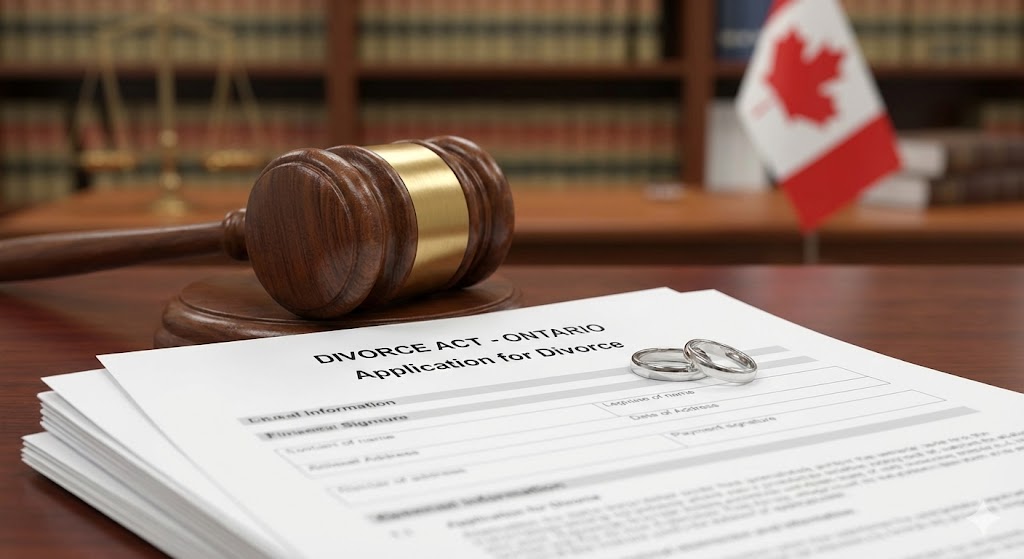
We all know that getting married is one of the most significant decisions a couple can make. Marriage represents commitment, partnership, and the intention to build a shared future. However, an even more difficult and consequential decision may arise when a marriage comes to an end and the parties choose to file for divorce. Divorce is not only an emotional process but also a legal one that requires strict adherence to procedural and statutory requirements.
In Ontario, divorces are governed primarily by the Divorce Act and applicable provincial rules. Understanding the legal grounds for divorce and the steps involved is essential for anyone navigating this challenging transition.
Residency and Legal Recognition of Marriage
First and foremost, before a divorce can be granted in Ontario, certain threshold requirements must be met. At least one spouse must have lived in the province for at least one year prior to filing, as the court cannot grant a divorce without this residency. Additionally, the marriage must be legally recognized, typically proven with a marriage certificate. Whether the marriage occurred in Ontario, elsewhere in Canada, or in another country, valid documentation must be provided. If the marriage took place outside Canada, additional steps may be required to confirm that the marriage is legally valid under Canadian law.
Grounds for Divorce in Ontario
The Divorce Act outlines three specific ways in which a marriage breakdown can be proven.
1. One-Year Separation
The most common used ground for divorce is separation. A couple may apply for a divorce if they have lived separate and apart for at least one year. Separation does not necessarily require the spouses to live in different residences. In some cases, couples may be considered separated while still living under the same roof, provided they are no longer functioning as a married couple.
2. Adultery
Another ground for divorce is adultery. Adultery occurs when one spouse voluntarily engages in a sexual relationship with someone outside his or her marriage. The spouse applying for divorce must prove that the other spouse committed adultery. It is important to note that a person cannot apply for divorce on the basis of adultery if they themselves were the one who committed it.
Proving adultery can be difficult, as it often requires an admission from the offending spouse or compelling circumstantial evidence. For this reason, many individuals choose not to rely on adultery as a ground for divorce, even when it has occurred.
3. Physical or Mental Cruelty
The third ground for divorce is cruelty. This applies when one spouse has treated the other with such physical or mental cruelty that the marriage becomes intolerable. Cruelty does not have to be physical. It can also be emotional, psychological, or verbal such that it makes a significant impact on the spouse’s well-being.
Nonetheless, courts will also assess whether there is a reasonable chance of reconciliation. If the court believes reconciliation is possible, it may delay the proceedings or recommend counseling to give the parties an opportunity to repair the marriage.
Reconciliation and Its Legal Impact
Couples may attempt to reconcile after separating, and living together for up to 90 days does not affect the one-year separation requirement. If the attempt fails, the original separation period can continue to count. Reconciliation beyond 90 days or permanent reunification can break the separation and may allow the couple to halt divorce proceedings, known as an abatement.
Situations Where a Divorce May Be Denied
To be clear, there are clearly defined circumstances where a court may refuse to grant a divorce.
One such circumstance is collusion. Collusion occurs when both spouses conspire to deceive or commit fraud against the court, such as fabricating evidence or misrepresenting facts in order to obtain a divorce. If collusion is proven, the court will deny the application.
Another reason a divorce may be denied involves condonation and connivance. Condonation occurs when a spouse forgives the other’s misconduct, such as cruelty or adultery, and resumes the marital relationship. Connivance refers to situations where one spouse encourages or facilitates the other’s misconduct and then attempts to rely on it as grounds for divorce. In such cases, the court may determine that granting a divorce would be inappropriate.
Procedural Steps to an Uncontested Divorce
To obtain a divorce, specific procedural steps must be followed. The process begins with filing an Application for Divorce (Form 8A), which outlines the details of the marriage, the parties, and the grounds for divorce. Any additional claims, such as parenting orders or support, may also be included. The marriage certificate must be filed with the application, which is submitted to the Superior Court of Justice or Family Court Branch where either spouse resides, either in person or online.
An Affidavit of Divorce (Form 36), confirming the breakdown of the marriage and the date of separation, and an Affidavit of Service (Form 6B), confirming that the other spouse was properly served.
Procedural Steps to a Contested Divorce
Regardless of whether you are seeking an uncontested divorce, you must complete Form 8: Application. The responding party must then file Form 10: Answer, which is used to respond to the divorce application by setting out their position and addressing any contested issues. If the Respondent raises new matters in the Answer that were not addressed in the original Application, the Applicant may file Form 10A: Reply to respond specifically to that new information.
Conclusion
Divorce is a complex legal process that requires meeting residency requirements, proving the breakdown of the marriage, and following strict procedures. In Ontario, courts may deny a divorce in cases of collusion, condonation, or connivance. Understanding the legal framework and procedural steps can help individuals navigate the process more effectively and provide clarity during a difficult time.
Key Takeaways
- Divorce in Ontario requires residency for at least one year and legal recognition of marriage.
- Grounds for divorce include one-year separation, adultery, and physical or mental cruelty.
- Certain situations like collusion, condonation, or connivance can lead to a denied divorce.
- Procedural steps involve filing an Application for Divorce and related forms in court.
- Understanding your rights and legal obligations is crucial to navigate the divorce process effectively.
Divorce is not just a personal decision – it is a legal process with long-term consequences. Understanding your rights, obligations, and options early can help you avoid unnecessary delays and costly mistakes. If you are considering a divorce or have questions about the process in Ontario, speaking with an experienced family law lawyer can provide clarity and peace of mind. The team at Progressive Legal Solutions is here to guide you through each step with practical advice and strategic support tailored to your situation.
Under Canada’s Divorce Act, there are three legal grounds for divorce in Ontario: living separate and apart for at least one year, adultery committed by the other spouse, or physical or mental cruelty that makes the marriage intolerable. The most common ground used is one-year separation.
Yes. At least one spouse must have lived in Ontario for a minimum of one year immediately before filing for divorce. Without meeting this residency requirement, an Ontario court cannot grant a divorce.
Yes. Spouses can be legally separated while living under the same roof if they are no longer functioning as a married couple. Courts look at factors such as separate finances, lack of intimacy, and independent daily lives to determine separation.
An uncontested divorce typically takes about 4 to 6 months from the time the application is filed, assuming all paperwork is completed correctly and there are no outstanding issues related to support or property.
Yes. A court may refuse to grant a divorce in cases of collusion (deceiving the court), condonation (forgiving misconduct and resuming the relationship), or connivance (encouraging misconduct and relying on it as grounds for divorce).
In most cases, yes. Courts generally expect issues such as child support, spousal support, and property division to be addressed before granting a divorce, especially where children are involved.
Yes. Couples may attempt reconciliation for up to 90 days without interrupting the one-year separation period. If reconciliation fails within that time, the original separation date can still be used.
To begin a divorce, the Applicant must file an Application for Divorce (Form 8A), along with a marriage certificate. Additional affidavits are required later, including an Affidavit of Divorce (Form 36) and an Affidavit of Service (Form 6B).
An uncontested divorce means both spouses agree on all issues and only seek the divorce order. A contested divorce involves disputes over matters such as parenting, support, or property and requires additional court steps, including an Answer (Form 10).
While it is possible to file for divorce without a lawyer, the process involves strict legal requirements and procedural rules. Legal advice can help avoid delays, errors, and unintended consequences, especially where support or property issues exist.
